
When Manufacturing Opportunities Depended on Individual Follow-Up

Manufacturing & Industrial Business The Situation A manufacturing company generated opportunities through customers, distributors, partners, referrals and direct enquiries. However, opportunity management depended heavily on individual salespeople. Information about prospects, follow-ups and next actions was often held across conversations, spreadsheets and individual working practices. The Perceived Problem The business initially viewed this primarily as a


Pillar Four: Leadership Intelligence

Every commercial decision shapes the future of a business. But good decisions require reliable information. Many leaders receive reports filled with numbers. Yet they still struggle to answer important questions. Where are customers finding us? Which activities generate qualified opportunities? Where are we losing potential customers? Which investments create measurable growth? Without clear answers, planning

Reducing Friction Across the Patient Journey

Healthcare & Wellness Practice The Situation A growing practice was receiving patient interest, but prospective patients were not always progressing smoothly from initial enquiry to appointment. Different parts of the journey were managed separately, creating avoidable delays, questions and uncertainty. The Perceived Problem The initial focus was on generating more enquiries. But increasing enquiry volume

Pillar Three: Commercial Operations

Many businesses believe growth stops when marketing slows down. In reality, growth often slows because operations can’t keep up. Imagine generating twice as many enquiries. Can your team respond quickly? Are follow-ups consistent? Is information easy to access? Can customers move smoothly from enquiry to delivery? These operational questions directly affect commercial growth. Every delay.

Pillar Two: Customer Acquisition

Generating enquiries is only the beginning. Sustainable growth depends on attracting the right customers not simply more customers. That’s the purpose of customer acquisition. Many businesses measure success by lead volume. But commercial growth is driven by lead quality. A smaller number of qualified enquiries often creates more value than hundreds of unqualified ones. Effective

Pillar One: Commercial Visibility

The best business in a market doesn’t always win. The business that gets discovered often does. Commercial visibility is one of the most overlooked drivers of business growth. Many organizations focus on improving products, hiring salespeople, or increasing advertising budgets. But they forget one simple question: Can the right customers actually find us? Today’s buyers

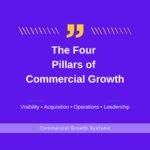
The Four Pillars of Commercial Growth

Every business wants growth. But growth doesn’t come from one department. It comes from four connected pillars working together. I call these the Four Pillars of Commercial Growth 1. Commercial Visibility Can the right customers discover your business?If people can’t find you, they can’t buy from you. Visibility today extends beyond websites and search engines.

When Visibility Wasn’t Turning Into Appointments

Healthcare & Aesthetic Practice The Situation A healthcare and aesthetic practice had established a reasonable level of online visibility. People were finding the practice, visiting its digital channels and showing interest in its services. Yet appointment enquiries were not increasing at the same rate. The Perceived Problem The obvious response was to generate more traffic.

When More Manufacturing Enquiries Were Not Necessarily Better

The Situation A manufacturing business wanted to increase the number of enquiries coming from potential customers. The company was already receiving enquiries, but volumes and quality varied considerably. Some were relevant commercial opportunities. Others were poorly aligned with the company’s products, capabilities or target markets. The Perceived Problem The obvious objective was to generate more

When Good Clinical Information Was Difficult for Patients to Navigate

Healthcare, Wellness & Aesthetic Practice The Situation A healthcare and aesthetic practice had substantial information about its treatments and areas of expertise. The challenge was that this information had developed over time across different pages and channels, making the overall digital experience difficult for prospective patients to navigate. The Perceived Problem The practice initially viewed

Scroll to Top